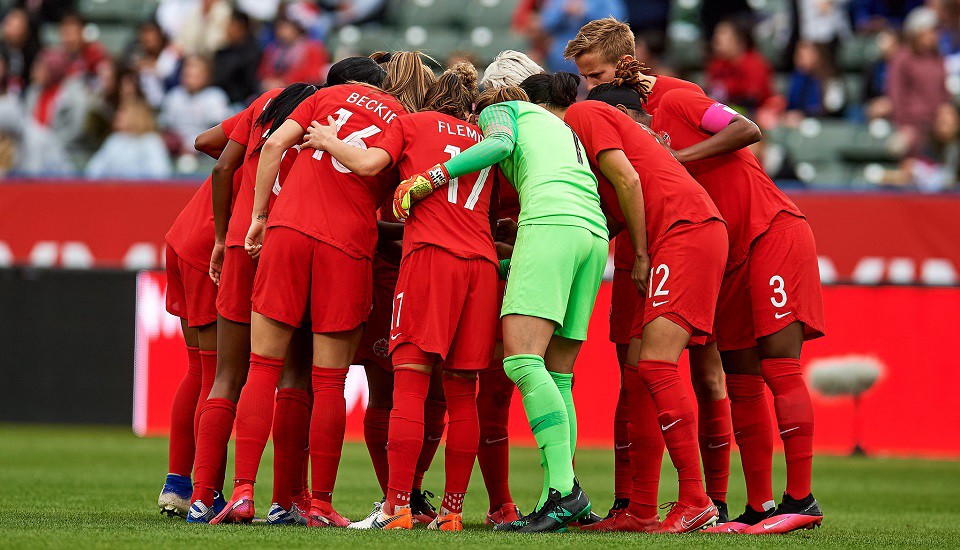
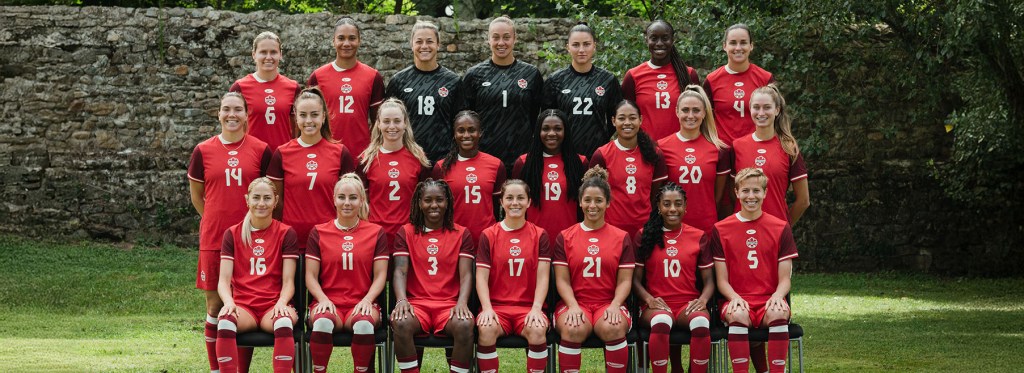
With the Olympic roster finally here, there have been many dissections of Bev Priestman’s choices, as well as discussions regarding the likelihood of this squad winning a medal. Many have expressed disappointment, whilst others (including myself) are pleased with the roster. Below, I’ll break down my thoughts on each element of the Olympic squad.

Experience v Youth
There has been some criticism of the roster relying too heavily on regular players; on the contrary, this squad feels much fresher than it ever was under Kenneth Heiner-Møller. In terms of the older vets (i.e 30+), Priestman has chosen to bring Christine Sinclair, Desiree Scott, Allysha Chapman and Steph Labbé. Though these four will still play a significant role during this Olympics, it is important to note that younger players within their positions are beginning to come through under Priestman’s guidance — and these younger players will likely be seeing a lot of minutes this Summer. In the centre-forward role, Evelyne Viens has secured the gig as Sinclair’s understudy, yet Priestman clearly trusts the 24-year-old Quebecan to hold her own despite a relative lack of caps. Sinclair may be the more obvious starter on paper, but it would not be surprising to see this role split more evenly between the two. This would certainly be the most sensible decision, in order to gauge whether Viens can become the centre of our attack for the future.
Though she did not make the roster on this occasion, 22-year-old Gabrielle Carle is beginning to see regular playtime in friendly matches, and could form a fine replacement for Chapman as Canada’s starting left-back in the near future. In the goalkeeper position, Labbé’s alternative is obvious: at the age of 25, Kailen Sheridan is the more likely pick to be the no.1 this Olympics. Lastly, there are several young midfielders, including 20-year-old first time Olympian Julia Grosso, who are poised and ready to come in for Scott once they pick up a little more experience.
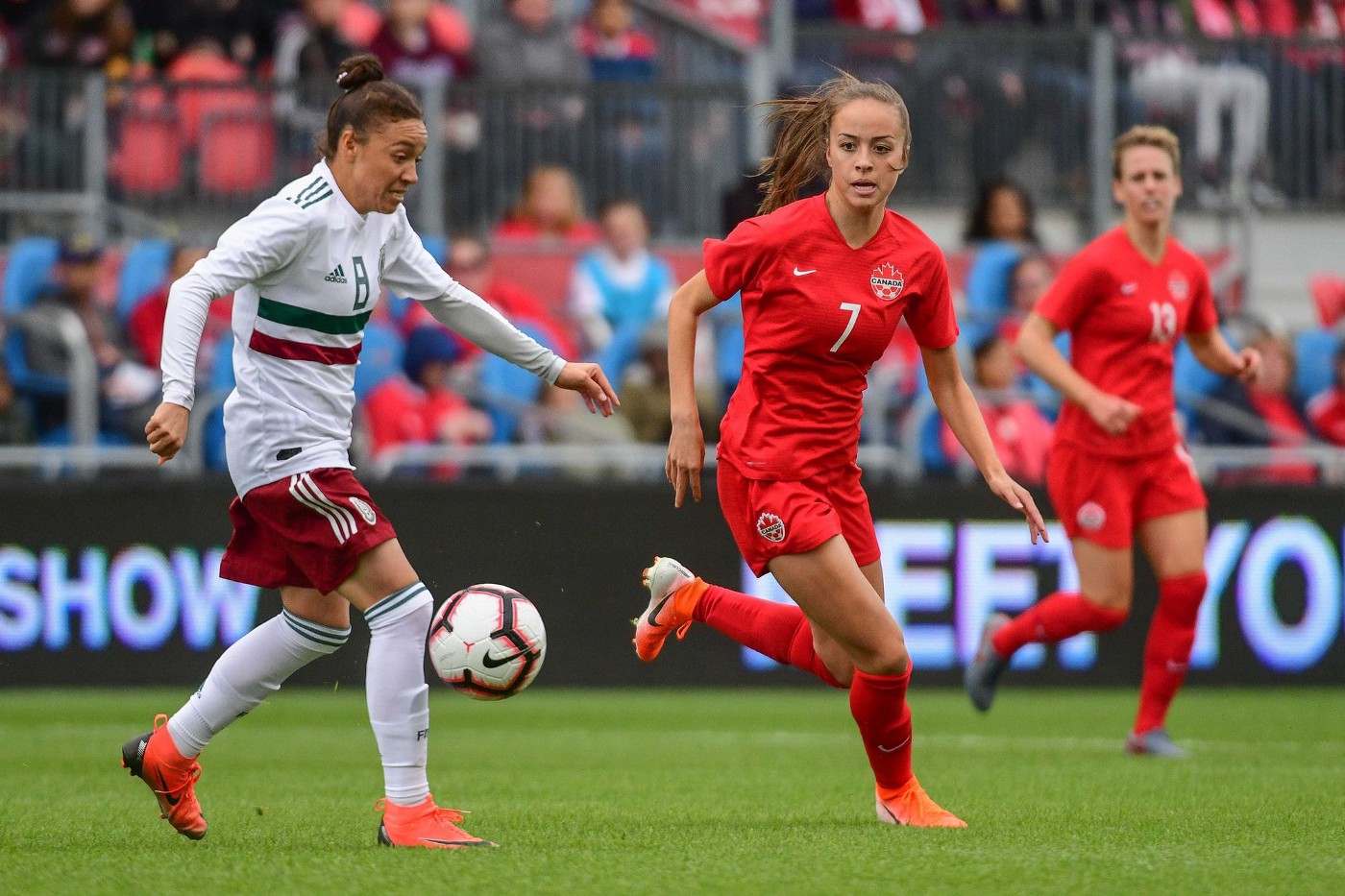
Grosso’s inclusion is perhaps the most glaring example of Priestman’s commitment to giving new players an opportunity to prove themselves. That last midfield spot most likely came down to either Schmidt or Grosso — the former, a 205-cap veteran whose career spans fifteen years, the latter a college student who has started only 33% of her 24 appearances. This selection is a massive opportunity for Grosso, and a testament to Priestman’s faith in her potential.
Outside of these older veterans, much of the squad does consist of the same players as were selected for Rio 2016. However, this does not necessarily pose a problem, as many of these regular players are in their early to mid twenties despite their vast experience. Jessie Fleming, Ashley Lawrence, Janine Beckie, Kadeisha Buchanan, Quinn, Nichelle Prince and Deanne Rose all boast more than fifty caps each, with Buchanan already reaching the 100 mark at the age of 25. On paper, such a heavily experienced squad may suggest an over-reliance on regular players, but these younger veterans have the potential to remain with the squad for the next decade or more. At the same time, Priestman has selected some new players — Jayde Riviere, Kailen Sheridan, Julia Grosso, Evelyne Viens and Vanessa Gilles — to bolster this experienced core.
The Centre-Forward Dilemma
One of the major complaints from a lot of commentators is the absence of Jordyn Huitema; an omission has been puzzling for some, but makes complete sense for anyone that has been paying attention to her form over the past year. Huitema is a bright spark for certain and, at the age of just 20, has a long and prosperous career ahead of her. Dubbed as “the next Sinclair” since her debut at 15, the youngster has faced overwhelmingly high expectations, and the buzz surrounding her has overestimated her actual contribution to the team thus far.
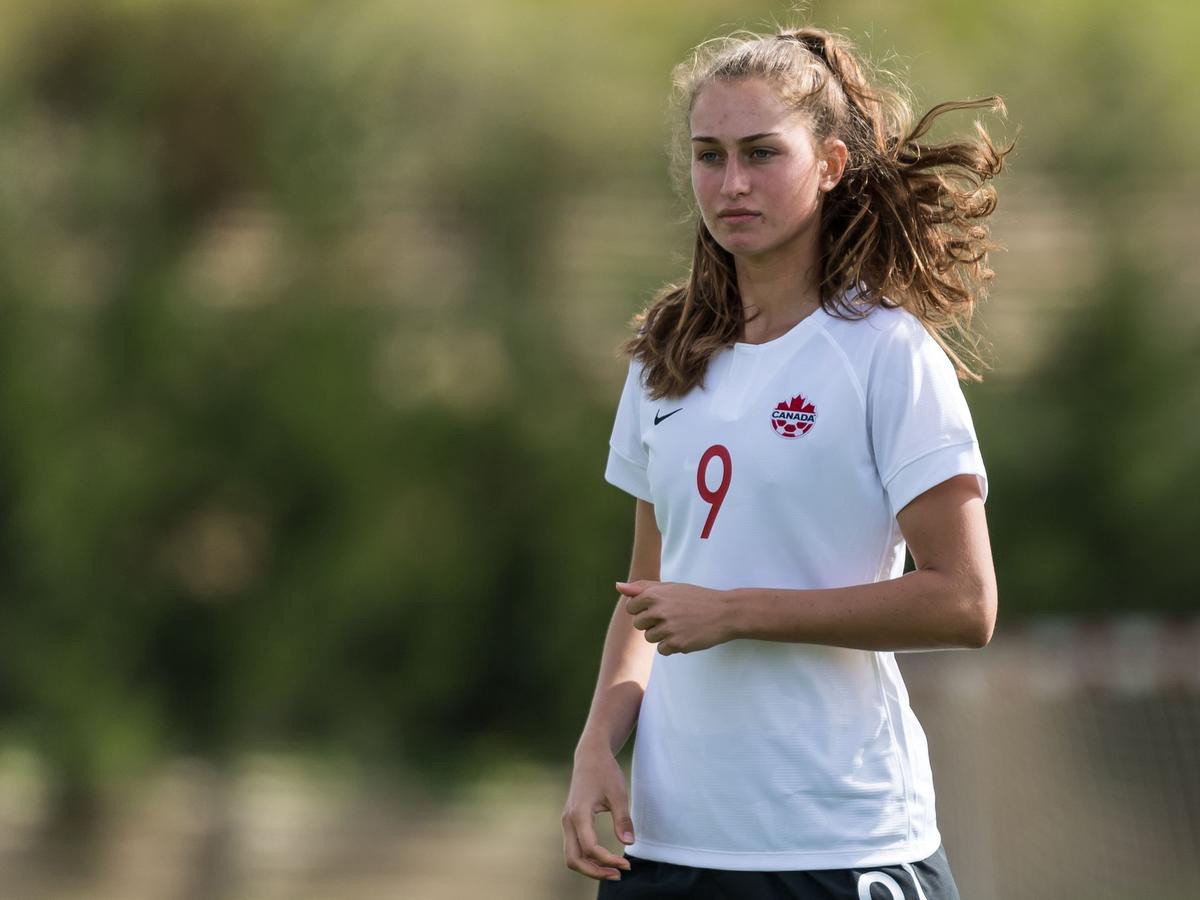
I covered this issue in my roster prediction, but to summarise: Huitema’s 13 goals in 37 appearances sounds — and is — impressive, but looking into the details of that statistic shows that she has not yet proved her ability against bigger and better teams. Five of Huitema’s 13 goals were scored in a 9–0 blowout against Jamaica, with her other goals coming against Cuba, St Kitts and Nevis, and Costa Rica. To compare with our other forwards; 48% of Beckie’s goals have come against teams in the top-30, with Leon coming in at 37% and Prince at 36%. Viens may only have scored two goals thus far, but one of those goals came against sixth-ranked England, proving her ability to provide goals in high-stakes matches despite her short international career. In addition, Huitema failed to make an impact in any of the four games she has played this year thus far, generally seeming hesitant and lacking in confidence.
The choice for Priestman likely came down to Viens or Huitema, and the choice of Viens is obvious when considering all of these factors. Arguments to the contrary rely purely on sentimental value — and when this team is struggling to score goals regardless, prioritising a striker who has not demonstrated the ability to score against Olympic-level teams would have been a poor decision.
Variety in Midfield
On paper, it may seem odd that Priestman has only selected four players that are technically categorised as ‘Midfielders’; Quinn, Fleming, Scott and Grosso. Looking at the rest of the roster, however, there is a wealth of versatility that will give Priestman many more options in this area, whilst still retaining extensive options elsewhere. Of the rest of the team, Lawrence, Beckie, Rose, Leon and even Sinclair are capable of playing in midfield, adding both depth and unpredictability to the lineups that Priestman is able to deploy. Lawrence in particular, as arguably Canada’s strongest player, can be easily rotated between fullback and midfield either between or during games, creating difficulties for opposition who almost certainly will be monitoring her closely. Additionally, this allows Canada’s attack a level of fluidity, which is especially key for a team that can often find scoring difficult. Instead of relying on the same formation, Priestman is able to switch things up as needed when that goal just isn’t coming.

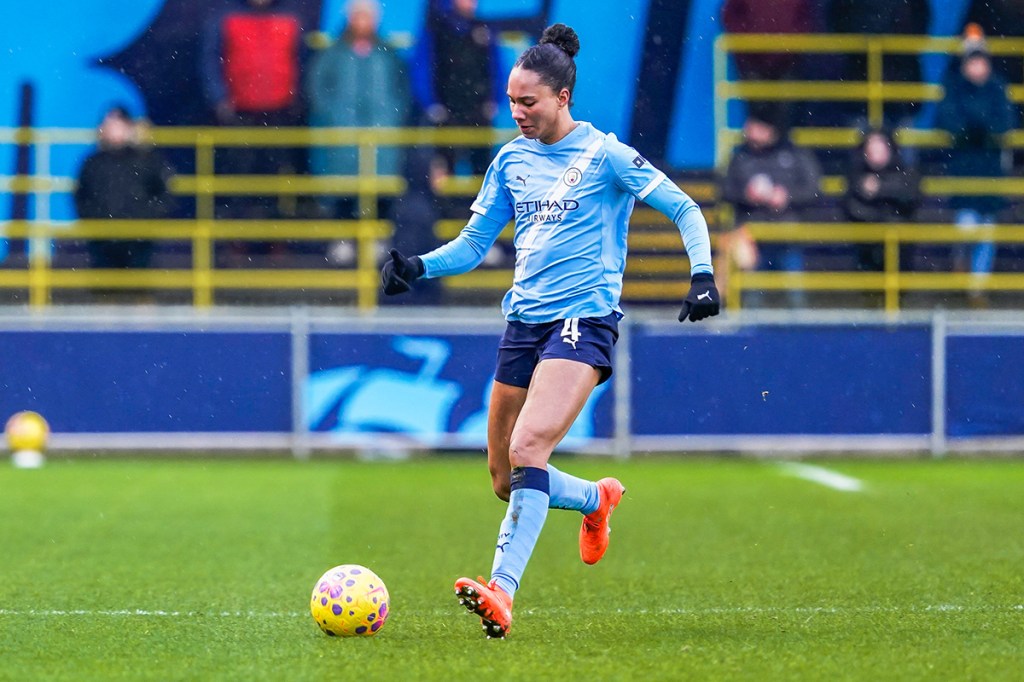
One option could be playing Sinclair in more of a number 10 role, the position she plays so successfully for the Portland Thorns, which would enable Priestman to play both her captain and Viens at the same time. With Sinclair’s playmaking skill and Viens’ finishing ability, this could be an answer to Canada’s goalscoring issues. Playing Beckie as an attacking midfielder would also be a good option, as she — by her own admission — is beginning to focus on setting others up for goals, something possibly fuelled by her successes playing as an attack-minded fullback for Manchester City. So many options within the attack can also be used to overload against more defensive-minded teams such as Chile, whose rock-solid backline and world-class goalkeeper will need a hell of a lot of power to break down.
The Need for Rotation
One of the major failures of Heiner-Møller’s managership was his refusal to properly rotate players. There is no better example of this than the 2019 World Cup. Over four matches, nine players started every single game and though Heiner-Moller did use all three subs against New Zealand, Netherlands and Sweden, they often came too late, with the average time of substitutions made sitting at 76.6 minutes. In the Netherlands game — where Canada had already done enough to get out of the group — only one substitute was made from the regular starting XI. As a result, these players went into the round of 16 match absolutely exhausted, with many having already played 270 minutes over the group stage. Of course, Canada may still have lost, particularly against such a strong Swedish side, but they were in a poor position to begin with due to something easily controllable. Even within this game, whilst 1–0 down, Heiner-Moller still waited until 84 minutes to use his final two substitutes.
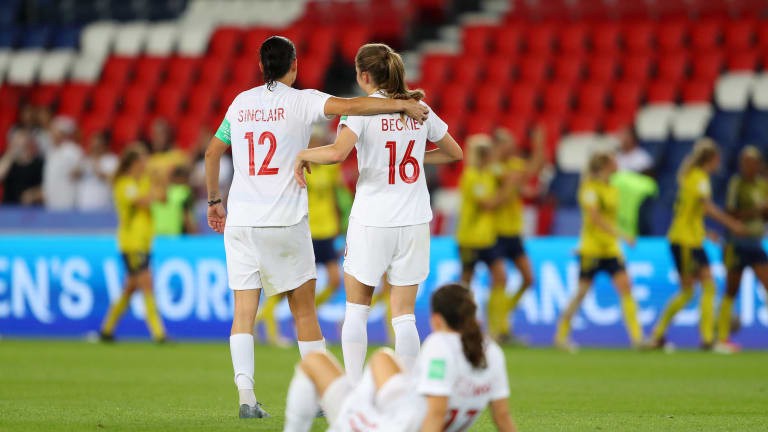
In her short stint as manager so far, Priestman has already shown her willingness to rotate. Though she is in a better position to do this due to the five substitutes rule this year, she has used a variety of players and rotated her starting XI frequently, even during the SheBelievesCup where her options were limited. Across those three games, only three out of 23 players played all 270 minutes — Beckie, Fleming and Zadorsky. It could be argued that the World Cup situation is completely different to a friendly tournament, and that is correct, however such a sharp contrast really highlights the differing approach of these two managers.
If Priestman is clever — and I believe she is — she will use all eighteen players to their best potential. Obviously, there will be a go-to starting XI, but taking the opportunity to rest those players where possible is essential to the success of the team, especially considering the tight turnaround within this tournament.
Building to the Future
Looking towards the Olympics, though Canada is certainly in a place to medal, it does not feel like this team are anywhere near their peak just yet. With just five months under a new manager, and only four friendlies played with something resembling their usual squad, they still have a lot of adjusting to do before they will become the top team they have the ability to be. The lethargy that developed under Heiner-Moller will take some time to undo, and the decline of this team cannot be turned around in the space of a few months. Certainly, with the way that Priestman is beginning to evaluate and include younger players, it seems that the squad for the 2023 World Cup will look far different than this Olympic team, with much more competition for places, and an infusion of new blood.

Yet, this is still a squad fully capable of medalling; this is a squad fully capable of winning gold. The talent within this team is obvious, but even stronger is their cohesion as a team, and the spirit they hold when they play together. With a manager who seems to have lit a fire under these players, they have been offered a fresh sense of hope: this is a new era for Canada, and this Olympics is just the beginning.

 Rise Higher
Leave a comment