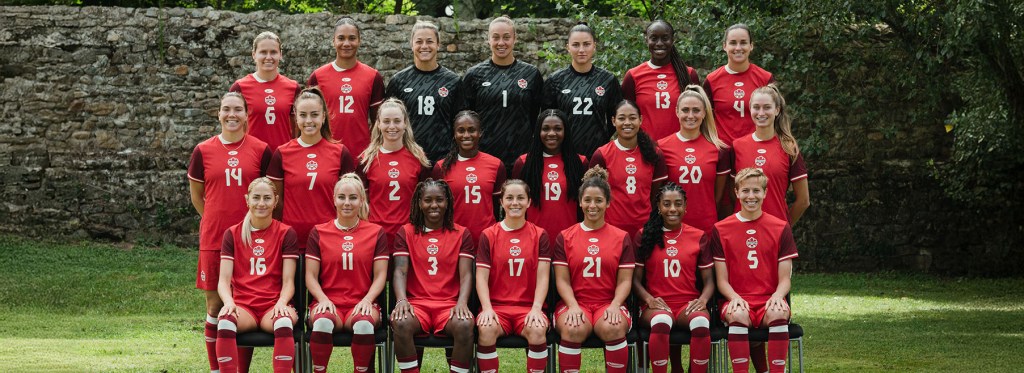
Coming off a disappointing end to 2025, I wanted to share my thoughts on where the CanWNT stands heading into an important qualification year.
Analysis: Individual Players
Latifah Abdu (24)
Abdu had an impressive season in the NSL. Given her young(er) age, I wouldn’t mind seeing her get some minutes to see if she can compete at the international level. I would have liked it if she could have been a late substitute against Haiti in Montréal this year. That would have given her some (hometown!) minutes in an inconsequential game. I’m not sure she rates above the other 9s we have in the pool, but if there are injuries again, I don’t mind seeing what she can do.
Marie Alidou (30)
Alidou had a decent year for Canada, and the complete opposite for her club. Leaving Benfica was the right decision: she’d been in Portugal since 2022 and had the talent to be able to make a move to a top league, if not a top team. Landing at Portland shows the profile she has, but it seems that the coach simply didn’t want to utilise her. (Now that he’s been fired, that might bring a change for 2026, but the Thorns also have some key players in the frontline expected to return.) If she can’t get solid minutes at the Thorns, Alidou needs to leave. We need players playing for their clubs—ideally starting, but Canadian beggars can’t be choosers at the moment—and if she’s not playing regularly, that doesn’t help internationally. For Canada, I appreciate that she scored a hat-trick this year. Alidou saw more international minutes this year than she has in the past, meaning more of an increased role and responsibility in the attack and driving play. I thought she did well, but I’m not convinced she’s an automatic spot on the roster.
Simi Awujo (22)
Awujo needs to be healthy for a consecutive six months so that it’s easier to evaluate her play properly. Utilised mainly as a substitute for Manchester United, she had good moments of play but still appears to be acclimating to the professional game. She impressed at the World Sevens, yes, but is still searching to make that same impact for her club in a game of actual soccer. For Canada, Awujo is young and has a profile that we’re sorely lacking elsewhere in the midfield. Maybe once we determine our playing style, Awujo will thrive in a more defined role.
Kayla Briggs (20)
I cannot wait until Briggs is out of college. She’s making an impact on the scoreboard, week in and week out in the NCAA, and I’m grateful we’re bringing her into the senior team now. Making her national debut this year, she brings real pace and a dynamism up front. Perhaps more importantly, she’s going to push one of the older forwards for a spot, creating an actual sense of competition.
Emily Burns (28)
In my opinion, that third keeper spot on the roster is wide open, and Burns is a solid fit. While I’d rather bring in a younger keeper, Burns plays regularly for Nantes, and the importance of those game-time minutes cannot be overlooked. She makes some impressive saves, and she’s the first-choice keeper for the currently 4th-ranked team in the Première Ligue. That’s not something to sniff at.
Gabrielle Carle (27)
Carle is finally getting her due under Stoney and played over 85% of minutes for the Washington Spirit in the 2025 season. She’s quietly consistent on the offensive front for Canada, with one assist a year for the last three years, and she is strong on the ball defensively. Carle needs to work on some of her decision-making and passing accuracy, but with a new contract for Washington and a national coach who seems to believe in her, she’s coming into her own. With 60 caps for Canada and her skillset, I believe she and Riviere should be the LB/RB pairing.
Samantha Chang (25)
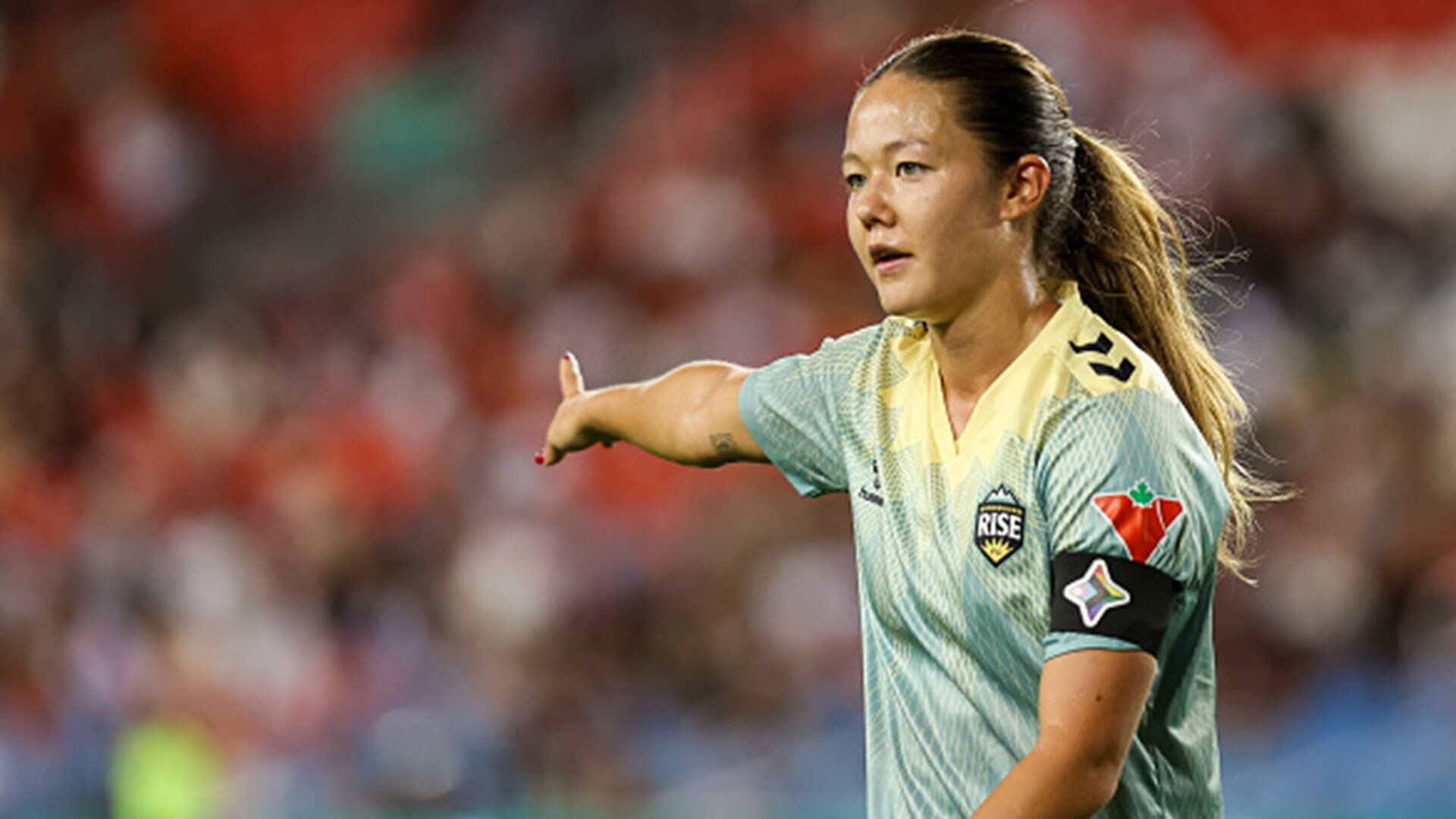
Honestly, I’m confused that we didn’t see more of Chang for Canada, especially towards the end of the year. She impressed for Vancouver this season, and displays a real calmness in the midfield. (Our midfield is a disaster, so I wouldn’t mind some calm.) I would like to see Chang again—ideally before the WWC Qualifiers—to assess her again.
Zara Chavoshi (23)
For Canada, Chavoshi acquitted herself well in her two matches played. I also appreciate the header goal; that feels like a Canadian centre-back bingo square. Given our propensity for injuries at the CB position, I would like to see her again. It’s important to have younger CBs in the mix to gain experience. However, I firmly believe she needs to make a club move soon if she doesn’t start earning more regular minutes with the Pride.
Annabelle Chukwu (18)
Quite frankly, the idea of Chukwu leading the national team line is the only hope I have coming out of 2025. Her game isn’t perfect yet, and we need to mind the NCAA, but for every possible window, I want her in camp and collecting a small number of minutes. I’m not saying we should overplay her or rely on her too early, but I want her to feel comfortable in the environment. I also look forward to seeing her at the U-20 WWC in 2026.
Sydney Collins (26)
After a two-year absence from playing official minutes with the national team, she’s back. Moving to Bay FC, where she’s regularly starting, is a good step in ensuring her development. It feels like her career has been so riddled with injuries that she needs a groove, and the Bay appear to be providing that. For Canada, I think she can have an impact. Collins didn’t look out of place in her appearances this year, but she’s (currently) not a starter for me on the depth chart. I know everyone thought she was destined to be the team’s best fullback, and I don’t deny her talent—but let’s give it more than 8 caps before we start trying to displace Riviere or Carle. Right now, I’m just thrilled she’s playing.
Sabrina D’Angelo (32)
I admit that I have a soft spot for D’Angelo. She has never been Canada’s number one, but has been numbers two and three for more than a decade. She makes questionable decisions sometimes—our keepers really need to work on their footwork—but she is capable of solid shot-stopping and is a reliable leader from the back. She’s also been playing well for Aston Villa this season, even when the scoreline would suggest otherwise. There’s not much to say about D’Angelo because, for the foreseeable future, she is and will remain Canada’s number two.
Jessie Fleming (27)
Writing this scares me because the second you mention Fleming’s name and are anything less than effusive, people cyberstalk you. There is no way you drop her from the roster altogether. Sometimes, based on her performances, I could be convinced that she should come off the bench rather than start. Not only does she need a rest, but you can see her face calculating every move during every game. When this team is performing more poorly than usual—ha, thanks 2025—she’s not the Fleming we need her to be, almost to the point where it might be a detriment to have her on the pitch. It’s like she carries the weight of this team on her back and starts overthinking everything mid-game when she realizes it’s not going well. That’s when she passes back nine times out of ten. When she’s clumsy in possession. When she misses an easy shot. The trick with Fleming is to figure out the best starting XI in Stoney’s chaos-ball and then give her room to run and play-make with confidence.
Vanessa Gilles (29)
Listen, Canada needs Gilles. I don’t make the rules. She scores game-winners, she stops goals, she converts penalties, and she (loudly) leads from the back. Gilles isn’t perfect—that Lyon v Arsenal game comes to mind—but she has vocally demonstrated a need for this team to get its schnitzel together. There’s no world in which her importance to this squad is overstated.

Julia Grosso (25)
Grosso is extremely impressive for Chicago; in fact, Grosso might be the Canadian midfielder who performs the best for her club. We’ve seen flashes of her brilliance for Canada, and I’m thrilled that 2025 ended her two-year national scoring drought. The trick is to find the best way to deploy her. As we all know, she and Fleming are not the best combo, and that’s a problem when you want your best midfielders on the pitch at the same time. Grosso is extremely good at progressing the play; by playing her and Fleming against top teams, Fleming automatically becomes conservative, and that’s not what we need. I’d like for Grosso to start matches where Fleming needs a rest, and perhaps play with Regan/Awujo.
Noelle Henning (18)
Called into her first senior camp this year, I’m excited to see what she can do as she advances in her collegiate career. As aforementioned, we need some young keepers in the system, and Henning is a great option.
Jordyn Huitema (24)
Despite publicly complaining about her lack of productivity in the ‘23 WWC, I’ve become a Huitema defender as of late. I’d like to see more from her, but at 24 years old, she’s our 9th all-time leading scorer and is nearing 100 caps. She has a ton of experience, and you can see the growth in her game. That being said, she needs to work on staying on her feet and needs to make better decisions in the final third. In all likelihood, unless she scores more consistently for Seattle, she’s one of the forwards on the bubble who could be displaced by college kids’ availability.
Kaylee Hunter (17)
Hunter was done dirty by AFC Toronto in not being released for the U-17 WWC, but overall, she impressed in the NSL this year. With more experience, she could become an important player for the national team; I’m not necessarily thinking about 2027/28, but the next competition cycle. I wouldn’t mind calling her up next year to give her some good substitute minutes to see what she can do.
Florianne Jourde (21)
I thought Jourde looked great in her caps this year, and she’s playing well for PSG. (Well, until the transfer certificate debacle saw her sidelined.) I see every reason to keep her in the midfield pool, and I hope we can see more from her in 2026.
Clarissa Larisey (26)
To me, Larisey brings a forward profile that we haven’t seen since Deanne Rose’s glory days. She definitely has a few areas to work on, but I like the raw talent there, and I think the move to Houston will bode well. Also, from a statistics perspective, she is intriguing with her goals/assists in limited minutes, and I would like more data points to see if that rate of goal contributions sticks.
Ashley Lawrence (30)
Lawrence has seen a bit of a resurgence lately, earning a few assists with OL Lyonnes, but she’s still not reaching regular playing time. It’s also clear as day that her performance for the national team is not what it used to be. I’m not sure why that is, but I do know that I’d rather play Riviere, Carle, Sonis, or even Levasseur—as would Stoney and her team, apparently.

Adriana Leon (33)
Listen, Leon can obviously score. That is not in question. My question is: can she step up consistently under a coach not named Bev Priestman? As the oldest forward in this player pool, we have to consider life after her, and I want the best team, not the best players. There’s a distinction there, and while Leon can be incredible, she runs hot and cold.
Marie Levasseur (28)
After a few years away from the national team, I’ve been impressed with Levasseur. I don’t think she’s a starter, but she’s a capable deputy. She also plays almost every minute for Montpellier, and the game time serves her well.
Ella Ottey (20)
Call her back in! I want to see more young defenders, and she had a good collegiate season with Wisconsin.
Delaney Baie Pridham (28)
I would have liked to have watched her play. It’s too bad no one warned her about a Canadian passport. (Kidding. Sort of.) Obviously, she has a nose for goal, and I want to see if she can make a difference on the international stage. My only concern is her age—for every “older” forward we develop later in their careers, we’re choosing not to integrate a younger player. Without a U-23 team and the money for development camps, this is a problem. Pridham needs to prove to me that she’s worthy of that spot.
Nichelle Prince (30)
Prince is one of the players who infuriates me because when she’s on, she is on. (That first-half brace against Australia in December 2023 comes to mind.) The problem is, she’s not playing regularly for her club. In a stacked forward line at Kansas City, she’s lucky to be a substitute. If I were Stoney, I’d be telling her to move to stay in consideration for Canada. Prince has been a major player for the national team; she has 17 goals and 14 assists. Having said that, she didn’t register a goal or assist in 2024, and had 1G 2A in 2025. (The one goal was her own rebound off the keeper against Argentina, and then the assists came against Chinese Taipei.) In my opinion, Prince, like Huitema, is on the bubble based on how the college kids perform.
Lysianne Proulx (26)
I’m not opposed to Proulx occupying that third keeper spot, but it’s far from locked up. Proulx has moved from club to club to club, but has rarely played since moving to Italy. I’d like it if she could move somewhere where she’s playing more; the bench at Juventus doesn’t help her, and it doesn’t help us.
Quinn (30)
Stoney mentioned that she needs to see more consistency from Quinn, and I think that’s the best way to sum them up. When they’re good, they’re great. When they’re off, they’re very off. I think of some of their long balls in the past—their assist to D. Rose against Wales, for example—and I don’t believe many of our midfielders can do that, or carry that same skillset. That being said, their propensity for injuries is a problem, and they need to be consistent while consistently healthy to make their way back onto my roster.
Emma Regan (25)
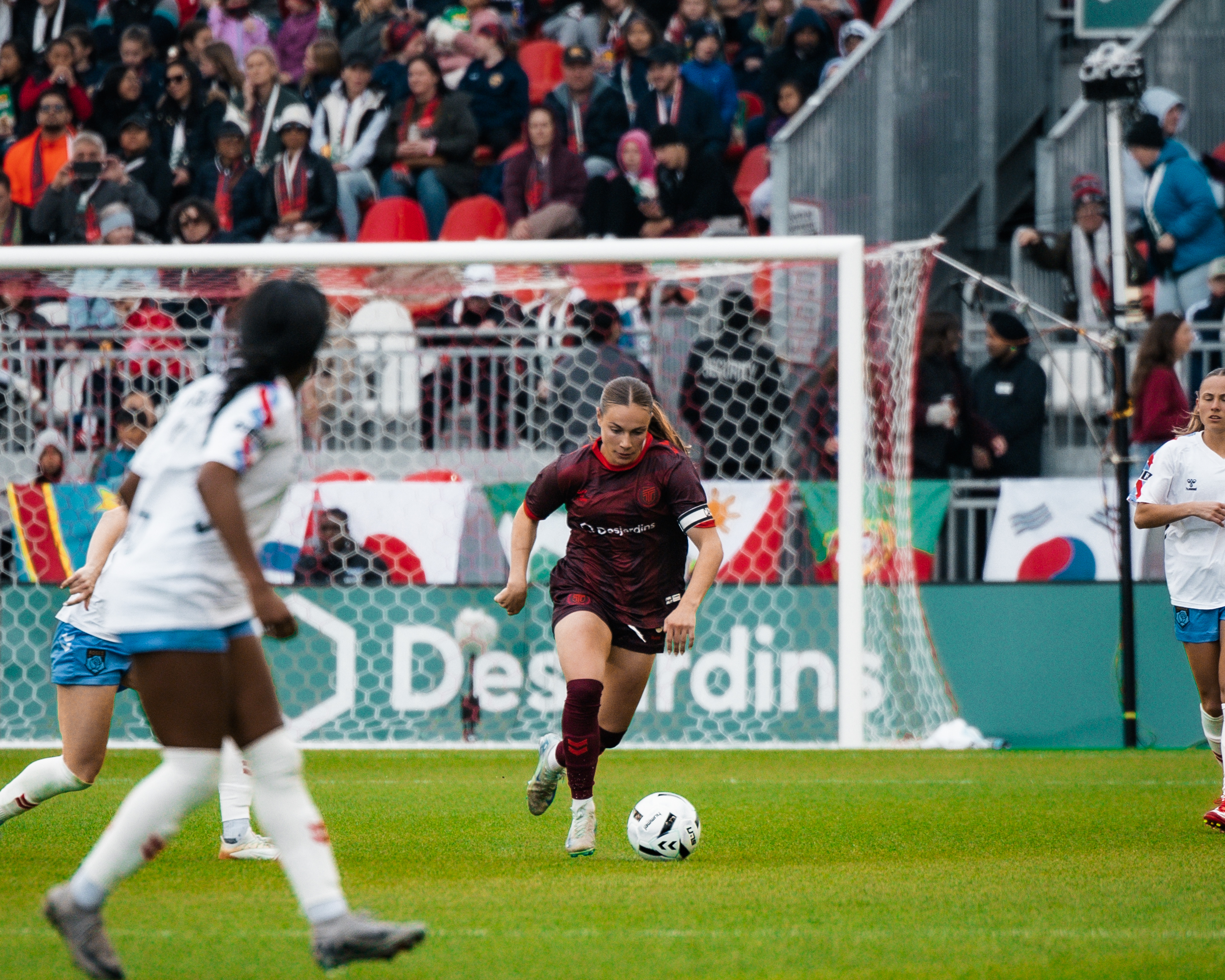
It’s clear from looking at the minutes for 2025 that Regan is indispensable for both club and country. She’s acquitting herself well as AFC Toronto’s first captain, and looks comfortable dictating play all over the park. Regan is getting there for Canada, but she’s not quite there yet. I’m thrilled she scored her first international goal; I wonder how to best balance her defensive duties with her offensive capabilities. Regan does well getting up the field, but we’ve been utilizing her as a 6. If we figure out how to use Regan properly, I could be convinced to always have her in the starting XI.
Megan Reid (29)
I think Reid is a suitable deputy when others are injured, but I’d rather spend our time developing younger defenders if possible. Nothing against Reid’s play at all, but I would rather put the minutes into Collins, Chavoshi, or Ottey.
Jayde Riviere (24)
Riviere deserves to start for Canada, hands down. Her play for country and club is almost always impressive. She can take players on and race back, which makes her a very effective FB. We just need her to stay healthy so she remains in top form.
Deanne Rose (26)
Bluntly, I don’t think we need D. Rose anymore. Since her injury in 2022, she has lost much of her pace, and she’s not contributing (goals or assists) in the WSL2. I’d rather give those national team minutes to someone who is a) scoring for their club consistently, b) younger, or c) both of the above.
Jade Rose (22)
I don’t believe that J. Rose has reached her potential yet, but she is obviously critical to this team. As a young player who can succeed anywhere in the back line, she’s instrumental. She needs to improve on her decision-making and some of her passes; she’s young, and going pro this year will only help. I can’t foresee a world where a healthy J. Rose is left off the 2027 or 2028 roster.
Nyah Rose (20)
N. Rose has potential, but I’m not seeing enough at the collegiate level to warrant an automatic call-up like Chukwu or Briggs. I’m happy to keep her in the pool and to watch her develop at the collegiate level, especially now that she’s moved to a better school (FSU).
Kailen Sheridan (30)
She’s Canada’s number one, and I can’t see that changing. I wish she’d work on her footwork because that’s been a problem for many years—v France ‘23 lives rent-free in my nightmares—but Sheridan makes saves no one else can. I am curious to see where she ends up now that she has left San Diego.
Olivia Smith (21)
I firmly believe Smith needs to be in senior team camps and warrants a spot on the roster. I know I’m in the minority, but I don’t think she’s an automatic starter for the national team yet. She has talent, no question. For her to be a guaranteed starter, I need to see a few things: 1) a goal or assist against a top ten team, and 2) increased durability, which comes with some smarter decisions. As much as I hate to say it, I agree with Bev Priestman when she said (last year, pre drone-gate) that we need to see more of Smith against top ten opposition. Smith has so much talent, but we haven’t seen her as a game-changer for Canada in any quantifiable way. (I can just hear the “stats aren’t everything!” chants, and no, they’re not, but if your goals and assists only pad a lead against El Salvador, then you’re in the same conversation as many of our forwards.)
Janine Sonis (31)
Two things can be true at the same time: her inability to score against Switzerland almost killed me, and I still think she was the most well-rounded forward for Canada this year. In fact, Sonis was my top vote for the CSA Player of the Year. She has the most assists of any active player, and earning four in one match (v. Haiti) was an impressive feat. No one can deny her effort for this team, and her ability to play literally anywhere makes her extremely hard to drop. Coming off an impressive club season, if Sonis can add a goal tally or two to her international game next year, she’s likely a lock for 2027. (And again, I’d rather have her as a FB right now than Lawrence, and that says something.)
Bianaca St-Georges (28)
I don’t think we need to evaluate St-Georges again. I’m not sure what she brings as a forward that our other players don’t, and as a FB, I think we have enough depth, especially if we bring in Collins or Ottey.
Évelyne Viens (28)
Viens has had an up-and-down year with injuries. She has that poacher profile that our other strikers don’t have, but she needs consistent minutes (and health) to demonstrate that to coaches (and fans). Statistically, in GC (goal contribution) per minute, normalized GC per minute, and GC per minute against top ten opposition, Viens consistently ranks in the top six players. Couple that with her ability to regularly provide for her club, and I’d like to see her earn more minutes and see if she can keep her rates up.
Holly Ward (22)
Holly Ward has done very well in her first year on the national team. She has proven herself to be instrumental to the Vancouver Rise, and earning 2G 1A internationally in her first year is impressive. Given her young age and what she brings on the wings, I’m happy to have her consistently on the roster, but I’m not yet convinced that she is a starter. That’ll take some time.
Carly Wickenheiser (28)
Wickenheiser acquits herself extremely well for BK Häcken. She scores some impressive goals and has a good work rate. I’m not convinced that she is better than any of our other midfielders, or that she has a profile we lack. For that reason, I’m not keen to call her up on an initial roster, but if we have injuries, I wouldn’t be opposed to seeing her name.
Shelina Zadorsky (33)
I have to give credit where credit is due because Zadorsky was named an Olympic alternate and then became our minutes leader for 2025, scoring some goals in the process. Her play for West Ham fluctuates, and I don’t think she’s in our strongest starting XI when everyone’s healthy, but she is incredibly capable of filling in. A year ago, I wouldn’t have minded if we didn’t see her anymore. Now, I’d like to keep her on the roster.
Honourable Mentions
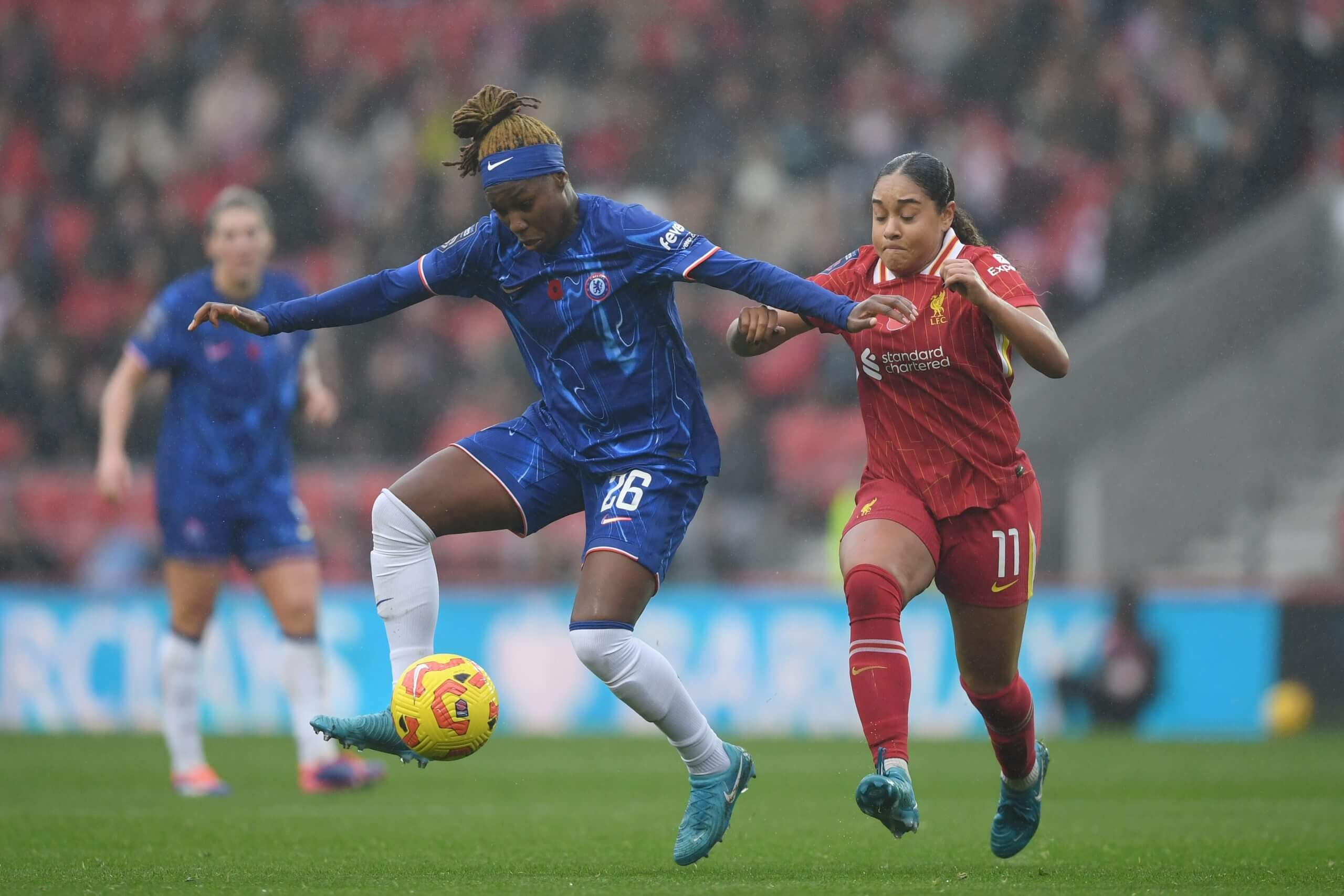
I need to mention both Kadeisha Buchanan (30) and Cloé Lacasse (32)—despite them not having played internationally for more than a year—as they’re both clearly still very much in the conversation. Not much has to be said about Buchanan except that I pray she returns soon—and ideally, at the same level of play. Lacasse is a forward who can bring experience and proven abilities, and I hope Stoney gets the chance to assess her. My only qualm with giving Lacasse more time is that the average age of our forwards is heading north of thirty, and that’s not a position I want to be in come 2027/2028.
National Team Statistics & Data Points
If you’re reading this, you’re likely aware that I am a big stats nerd. I have spreadsheets filled with pivot tables and formulas that track offensive contributions (all-time, normalized all-time per year, against top ten opposition), countries scored against, and partnerships that lead to goals. (I’ve also recalculated every player’s all-time minutes because sometimes the CSA website’s calculations say “-8 minutes” played, which is a) impossible, and b) leads to incorrect minute totals. For 2025 alone, they’re also inexplicably missing 45 minutes of play for Zadorsky, have two games with incorrect minutes for Sonis, and a game with -9 minutes for Leon. I’m just not sure how that happens.) In sharing some of my current data, I thought this might help others understand why I call for certain players to be called up/receive more playing time. I hope it also leads to more informed discussions on our player pool. For each chart and graph below, I’ve “limited” my data set to active players with at least one minute of play for the senior team.
Table One: All-Time Goal Contributions per Minute – Top Ten
| Player Name | GC/Minute All-Time (percentage, rounded) |
|---|---|
| Hernandez Gray, Jeneva | 3.57% |
| Reid, Megan | 1.48% |
| Larisey, Clarissa | 1.09% |
| Smith, Olivia | 1.01% |
| Ward, Holly | 0.83% |
| Viens, Évelyne | 0.79% |
| Leon, Adriana | 0.76% |
| Chavoshi, Zara | 0.68% |
| Huitema, Jordyn | 0.67% |
| Alidou, Marie | 0.64% |
The Math: I take every player’s total goal contributions (goals + assists) and divide that by the number of minutes played. This is more insightful than using the number of caps; you earn the same cap for either 1 minute or 90 minutes played, so this is more accurate for player efficiency. I multiply the quotient by 100 to get the percentage, and then rank the players. NB: this method uses real numbers, so for players with fewer than 1000 minutes, their position is likely falsely inflated. I’ve marked players with <1000 minutes in italics, and I’ll account for these differences in Table Two.
Table Two: Normalized All-Time Goal Contributions per Minute – Top Ten
| Player Name | Normalized GC/Minute All-Time (percentage, rounded) |
|---|---|
| Leon, Adriana | 0.646% |
| Sonis, Janine | 0.571% |
| Huitema, Jordyn | 0.558% |
| Viens, Évelyne | 0.527% |
| Prince, Nichelle | 0.507% |
| Smith, Olivia | 0.502% |
| Rose, Deanne | 0.444% |
| Alidou, Marie | 0.443% |
| Larisey, Clarissa | 0.441% |
| Lacasse, Cloé | 0.434% |
The Math: I realize saying words like “normalized” makes me sound like a nerd—a title I welcome—but in plain terms, normalizing a data set means that I’ve adjusted the numbers so the players can be compared fairly. Normalizing goal contributions by minutes played mathematically adjusts the weight for players who have very different amounts of playing time. To do this, I developed a formula where I apply shrinkage to stabilize the goal contributions per minute rates, and then I normalize those rates to an average number of minutes (the actual, real-time average of our active players) so that all players can be compared fairly.
Figure One: Goals Scored for CanWNT (by opponent, as %)
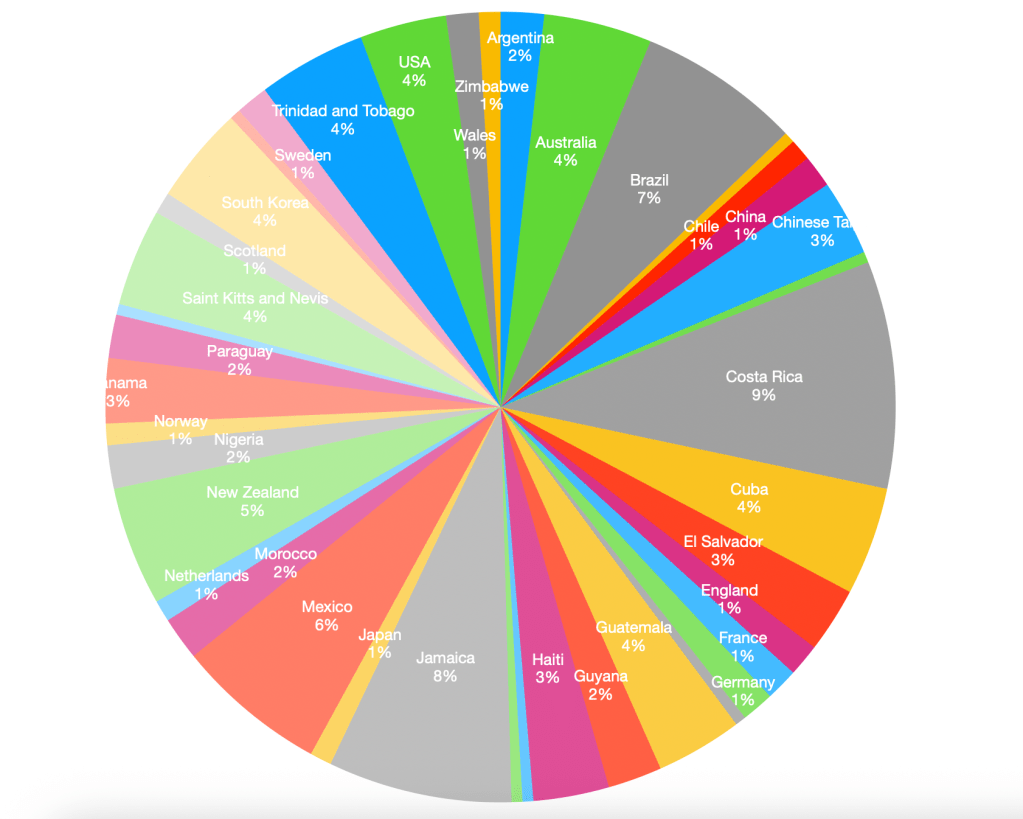
This pie chart presents the opponents our active players have scored against the most. (E.g., 9% of this team’s goals have been scored against Costa Rica.) As you can see, we score the most goals against common CONCACAF opponents (except the USA). While perhaps to be expected due to the number of CONCACAF fixtures we have, we have enough experienced players that I would like our rates against top-ten teams to be better (see the figures for Sweden, Netherlands, Japan, England).
Figure Two: Active Players’ Goals per Country

I know this is a pain to read, but this chart shows raw numbers, rather than percentages. It also demonstrates who is scoring the goals against each opponent, which I find a fun metric to look at as we look at (hopefully) qualifying for a WWC, where we’ll face different types of opposition.
Points to Consider
Age
Excluding Scott and including Buchanan/Lacasse, I calculated the average age of the players we track here on RH as of June 24, 2027—when the WWC starts. The answer? 27.4 years old. While I don’t think that age is too old, I broke down our current forward pool:
Table Three: Forward Ages as of 2027 WWC

I want us to consider this: taking all of Leon, Lacasse, Alidou, Prince, Sonis, and Viens to the next WWC isn’t the best planning (for either 2028 or the next cycle). In my opinion, we’d ideally lose two of those players, but who do you lose? They’re all regular call-ups. My personal vote would be for Prince and one of Lacasse/Alidou.
Who scores when it matters?
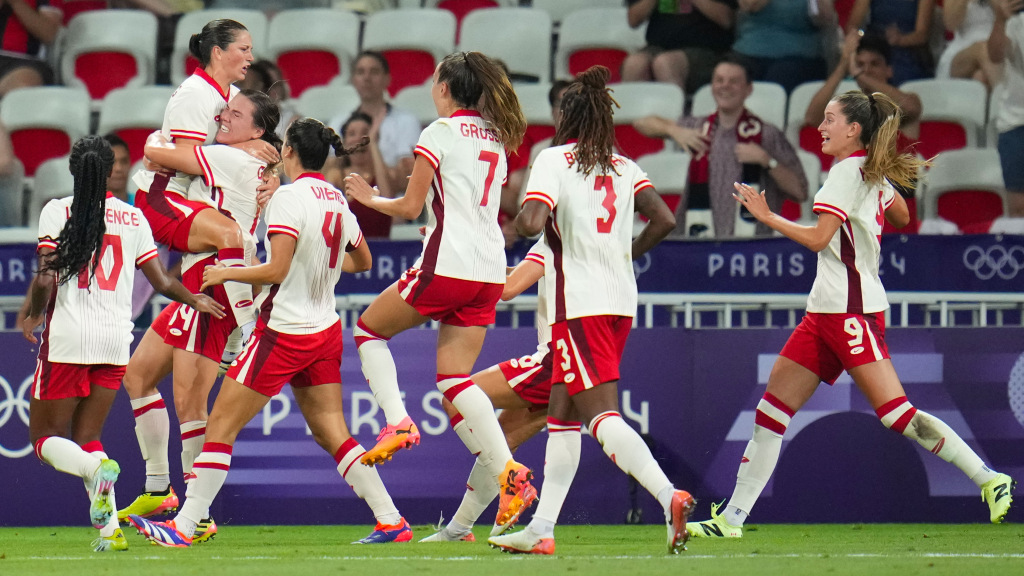
I thought it would be fun (“fun”) to see which of our players scores in either a WWC or Olympic tournament. Who lives up to the pressure?
Table Four: Goals by Current Players in a Major Tournament
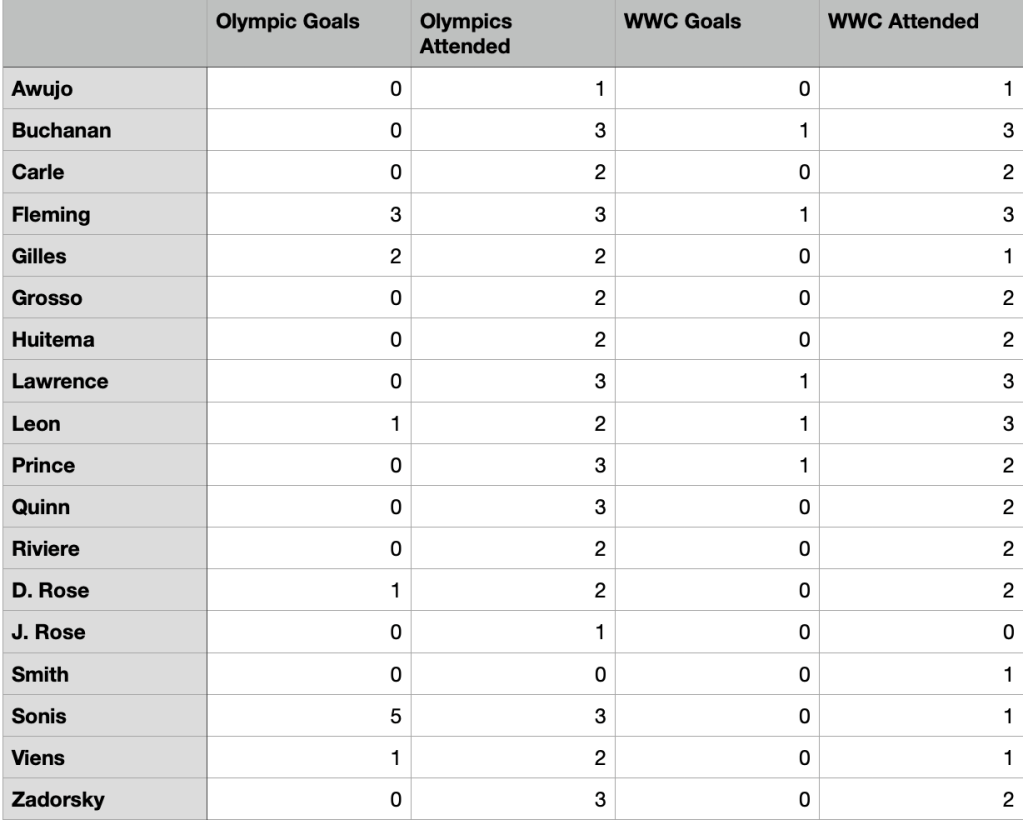
The above table lists our players who have participated in a major tournament. (I listed Deanne Rose with two Olympics (as opposed to three) since she was never included in a match-day squad in 2024.) The player that sticks out to me here is Huitema: with significant minutes in at least two of her four major tournaments, I would expect to see a goal by her name. (She also doesn’t have an assist at a WWC or Olympics.) Other than that, I don’t have conclusions on this data (at least, none that I’m comfortable making publicly yet). I simply want to provide this data as an evidence-based talking point as the team approaches WWC/Olympics qualification. (Also, yes, I know that Grosso scored the gold-winning penalty kick, but goals scored in a shootout don’t count as official goals, so she remains at 0 goals in a major tournament.)
Overall Thoughts
Bluntly, this has been a very ‘meh’ year for the CanWNT. Here are my key takeaways:
Pros
- We had some impressive debutantes and first-time callups. In particular, Ward, Briggs, and Chukwu should help bolster the forward line. I’m also happy that Burns, Henning, and Hunter have been exposed to the senior environment.
- Stoney gave opportunities to players who haven’t been seen in a few years: Levasseur, Chang, and Abdu.
- The goals we managed to score came from a variety of players and set-ups: penalty kicks, open play, and set pieces.
Cons
- Scoreless, winless, and clean sheet-less since June. I’ve come to expect us not scoring against top ten opposition, but the lack of defensive solidity is a massive concern.
- There doesn’t appear to be a strategic identity. I’m hopeful that this will be figured out early in 2026 as Stoney gels with the team and determines who will take the pitch in her starting XI. Right now, it’s chaos ball, and it’s not fun to watch.
- Despite the lack of scoring, we didn’t see many changes in the forward selection in the latter half of the year (either in general roster selection or in starters). I genuinely hope that good club play will play a more significant role than name recognition in the future.
(Still) Unanswered Questions
- Who can score consistently? Bueller?
- Can we get our defensive solidity back? (When do we see Buchanan back on the pitch? I bet there’s a correlation.)
- How do we balance age, current performance, and experience as we hope to qualify for the WWC?
 Rise Higher
Leave a comment